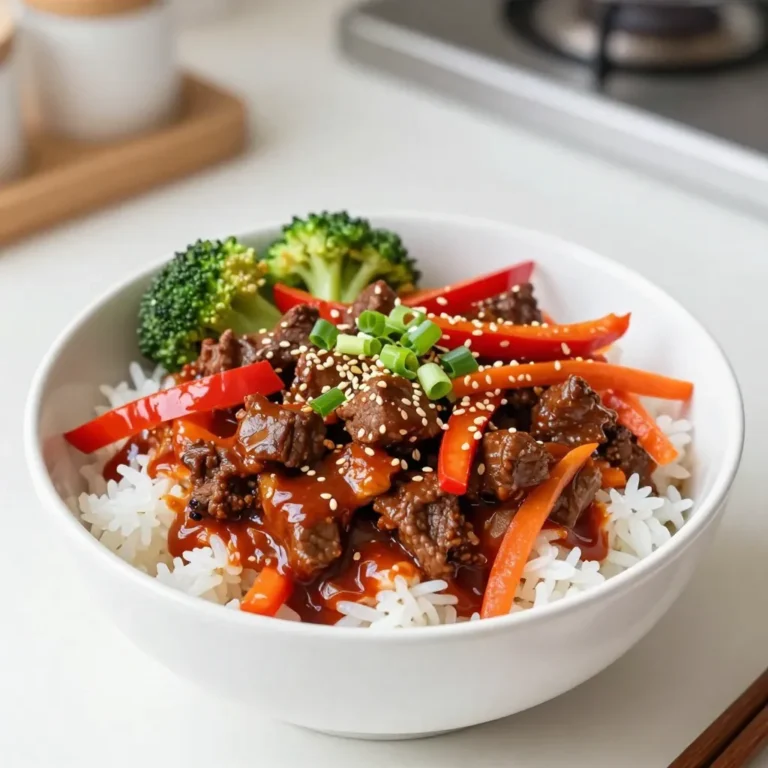
Are you craving a quick and tasty meal? My Spicy Korean Beef Bowls are packed with flavor and easy to make. With ground beef, fresh veggies, and a spicy sauce, you’ll have dinner ready in no time. This recipe is perfect for busy weeknights or impressing friends. Let’s dive in and create a dish that satisfies your taste buds and your schedule!
Why I Love This Recipe
- Bold Flavors: This recipe is packed with the bold and spicy flavors of Korean cuisine, making each bite a delight.
- Quick & Easy:
- Healthy Ingredients: Loaded with vegetables like broccoli, bell peppers, and carrots, this dish is not only tasty but nutritious.
- Customizable: You can easily adjust the spice level or swap in your favorite vegetables for a personalized touch.
Ingredients
Main Ingredients
- 1 lb ground beef (80/20)
- 3 tablespoons soy sauce
- 2 tablespoons brown sugar
Essential Seasonings
- 1 tablespoon gochujang (Korean chili paste)
- 1 teaspoon sesame oil
- 3 cloves garlic, minced
Vegetables and Garnishes
- 1 cup broccoli florets
- 1 red bell pepper, sliced
- 2 green onions, chopped (for garnish)
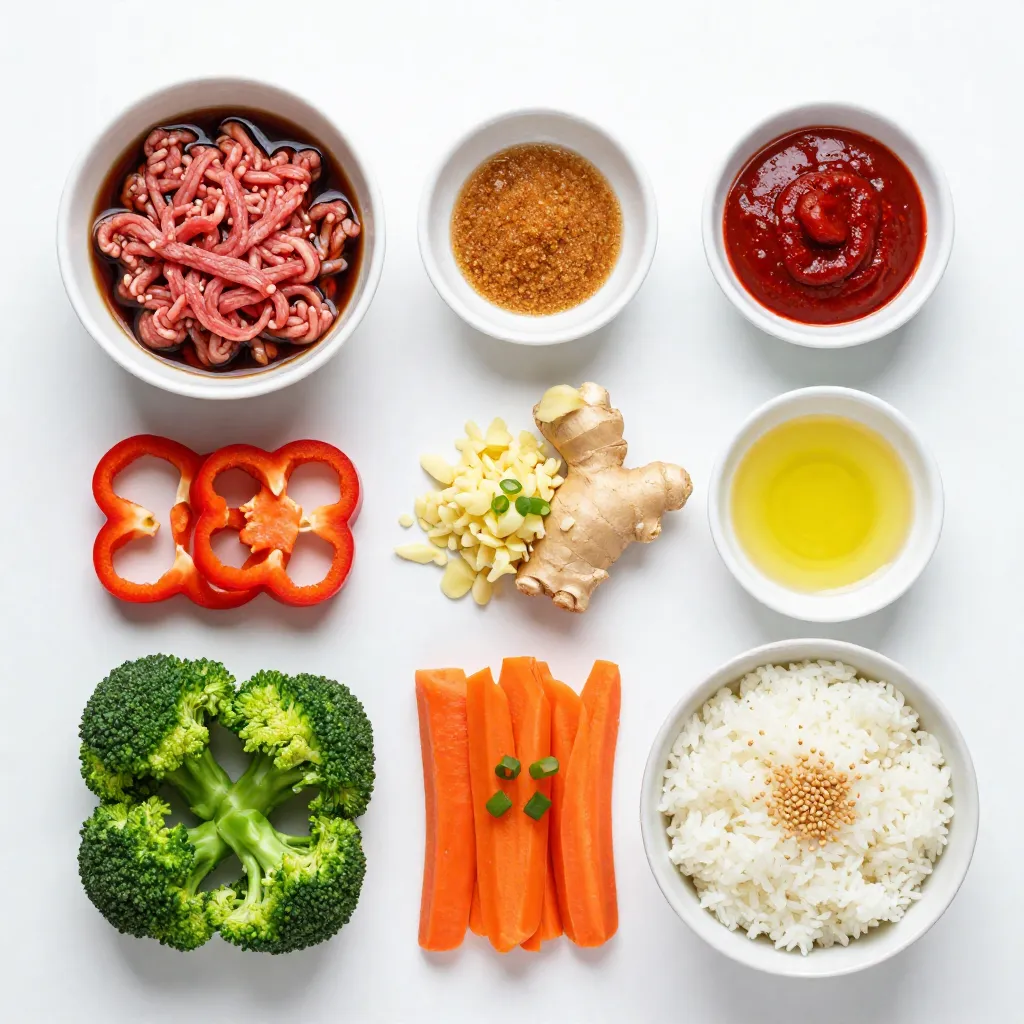
Gather these ingredients before starting. The ground beef gives the dish a rich taste. Soy sauce adds umami, while brown sugar balances the heat. Gochujang brings the spice, and sesame oil adds a nutty flavor. Garlic boosts the overall taste, making every bite delightful.
For veggies, broccoli and bell pepper add color and nutrition. The green onions finish the dish with a fresh crunch. You can mix and match depending on what you like. Enjoy the process of cooking and feel free to add your own twist!
Step-by-Step Instructions
Cooking the Beef
First, heat a large skillet over medium heat. Add 1 pound of ground beef. Cook it until it is browned, which takes about 5 to 7 minutes. Stir it well to break up any big chunks. After that, drain any extra fat from the skillet. This keeps your dish from being too greasy.
Creating the Sauce
Now, reduce the heat to low. In the skillet, stir in 3 tablespoons of soy sauce, 2 tablespoons of brown sugar, and 1 tablespoon of gochujang. Add 1 teaspoon of sesame oil, 3 minced garlic cloves, and 1 tablespoon of grated fresh ginger. Mix everything well. Let this simmer for about 3 to 4 minutes. The sauce will thicken and coat the beef nicely.
Preparing the Vegetables
In another pan, steam 1 cup of broccoli florets for about 3 minutes. You want them bright green and tender but still crisp. If you prefer, you can add the veggies to the beef mixture to cook through. Next, slice up 1 red bell pepper and julienne 1 carrot. Add these to the beef mixture. Sauté for another 3 to 5 minutes until the veggies are soft. This makes your dish colorful and crunchy.
Tips & Tricks
Achieving Authentic Flavor
Using fresh ingredients is key to great taste. Fresh beef, crisp vegetables, and ripe spices bring life to your bowl. For the best flavor, choose high-quality ground beef. The fat content (80/20) gives it a nice texture. Don’t skip on the gochujang. This Korean chili paste adds depth and spice. You can adjust the spice level by adding more or less gochujang. Start small and taste as you go. You can always add more, but it’s hard to fix if you add too much!
Cooking Techniques
For browning beef, use a hot skillet. This helps create a nice crust that adds flavor. Break the meat into small pieces as it cooks. This way, it cooks evenly. After browning, drain excess fat to keep your dish from being greasy. When steaming veggies, make sure not to overcook them. Bright green broccoli should be tender yet crisp. Steam for about 3 minutes. If you prefer, add the veggies to the beef mixture and let them cook together. This way, they soak up all the tasty flavors.
Presentation Suggestions
To make your bowls appealing, use deep dishes. Start with a base of jasmine rice. Then, layer the beef and vegetables on top. This creates a nice visual contrast. Drizzle some extra gochujang on top for color and a bit more heat. For garnish, sprinkle chopped green onions and sesame seeds. This not only adds flavor but also makes your dish look fancy. Serve with a side of kimchi for an authentic touch. It adds crunch and zing to your meal!
Pro Tips
- Use Fresh Ingredients: Fresh garlic and ginger elevate the dish’s flavor profile significantly, so opt for fresh rather than pre-packaged versions.
- Control the Spice Level: Adjust the amount of gochujang according to your spice tolerance. Start with less and add more to taste.
- Meal Prep Friendly: This dish stores well in the refrigerator for up to 3 days, making it perfect for meal prepping for the week.
- Customize Your Veggies: Feel free to swap in any of your favorite vegetables, such as snap peas or zucchini, for a personalized touch.
Variations
Protein Alternatives
You can switch the ground beef for chicken, tofu, or pork. Chicken gives a lighter taste. Tofu is great for a vegan option. Firm tofu holds its shape well in the dish. Pork adds a nice richness.
For vegan options, try using chickpeas or lentils. Both provide protein and soak up flavors well. When you use these, you still get a hearty meal without meat.
Vegetable Substitutions
Feel free to mix in other veggies like snap peas or mushrooms. Snap peas add a nice crunch, while mushrooms bring a rich, umami flavor. You can also use zucchini or bell peppers in different colors.
For seasonal veggies, consider asparagus in spring or squash in fall. These choices keep your bowls fresh and exciting.
Flavor Modifications
Adjust the spice level to fit your taste. If you want it milder, cut back on the gochujang. You can add more brown sugar for balance. For a spicier bowl, increase the gochujang or add chili flakes.
You can also enhance flavors with toppings. Kimchi adds heat and tang. A drizzle of sesame oil gives a nutty finish. You might also try a sprinkle of crushed peanuts for extra crunch.
Storage Info
Refrigeration Guidelines
To store your spicy Korean beef bowls, first let them cool down. Place the leftovers in an airtight container. This helps keep them fresh. You can store them in the fridge for up to three days. After that, the beef and veggies may lose their taste and texture.
Freezing Instructions
If you want to keep the beef bowls longer, freezing is a great option. First, let the beef mixture cool. Then, scoop portions into freezer-safe containers. Be sure to leave some space at the top, as the food expands when frozen. You can freeze the beef bowls for up to three months. To reheat, thaw them in the fridge overnight. Then, warm them in a skillet over low heat. Stir often to heat evenly.
Meal Prep Ideas
These spicy Korean beef bowls are perfect for meal prep. You can make a big batch on the weekend. Portion them into individual containers. This makes it easy to grab a meal during busy weeknights. Just heat and enjoy! You can also store cooked rice separately. This helps keep the rice fresh and fluffy until you’re ready to eat.
FAQs
How can I make this recipe spicier?
To boost the heat, add more gochujang. Start with an extra half tablespoon. You can also mix in some red pepper flakes. If you like it very hot, add sliced fresh chili peppers. Just remember to taste as you go. This way, you can find the perfect spice level for your taste.
Can I use brown rice instead of jasmine rice?
Yes, brown rice is a great choice. It gives a nutty flavor and more fiber. However, brown rice takes longer to cook. Prepare it according to the package directions. Typically, it needs about 40-50 minutes to cook. Make sure to adjust your timing if you use brown rice.
What to serve with Spicy Korean Beef Bowls?
These bowls pair well with many sides. Try kimchi for a spicy crunch. You can also serve pickled vegetables for a tangy taste. A simple side salad with cucumbers and sesame dressing works too. If you want more carbs, serve some steamed dumplings on the side.
This blog post covered the key ingredients and steps for making Spicy Korean Beef Bowls. We explored essential seasonings, the perfect protein, and flavorful veggies. You can adapt the dish with simple swaps or adjust the spice to suit your taste.
Remember, fresh ingredients make a big difference. Enjoy experimenting and impressing your friends with this tasty meal! Your kitchen can become a hub of delicious flavors and fun. Happy cookin
Spicy Korean Beef Bowls
Ingredients
- 1 lb ground beef (80/20)
- 3 tablespoons soy sauce
- 2 tablespoons brown sugar
- 1 tablespoon gochujang (Korean chili paste)
- 1 teaspoon sesame oil
- 3 cloves garlic, minced
- 1 tablespoon grated fresh ginger
- 1 cup broccoli florets
- 1 red bell pepper sliced
- 1 carrot julienned
- 2 green onions chopped (for garnish)
- 2 cups cooked jasmine rice
- to taste tablespoons sesame seeds (for garnish)
Instructions
- In a large skillet over medium heat, add the ground beef and cook until browned, about 5-7 minutes. Drain any excess fat.
- Reduce the heat to low and stir in soy sauce, brown sugar, gochujang, sesame oil, minced garlic, and grated ginger. Mix well and let simmer for 3-4 minutes.
- In another pan, steam the broccoli florets for about 3 minutes until bright green and tender but still crisp. Alternatively, you can add the veggies directly to the beef mixture to cook through.
- Add the red bell pepper and carrot to the beef mixture and sauté for another 3-5 minutes until the veggies are tender.
- To serve, spoon cooked jasmine rice into bowls and top with the spicy Korean beef and vegetable mixture.
- Garnish with chopped green onions and sesame seeds for an added crunch and flavor.