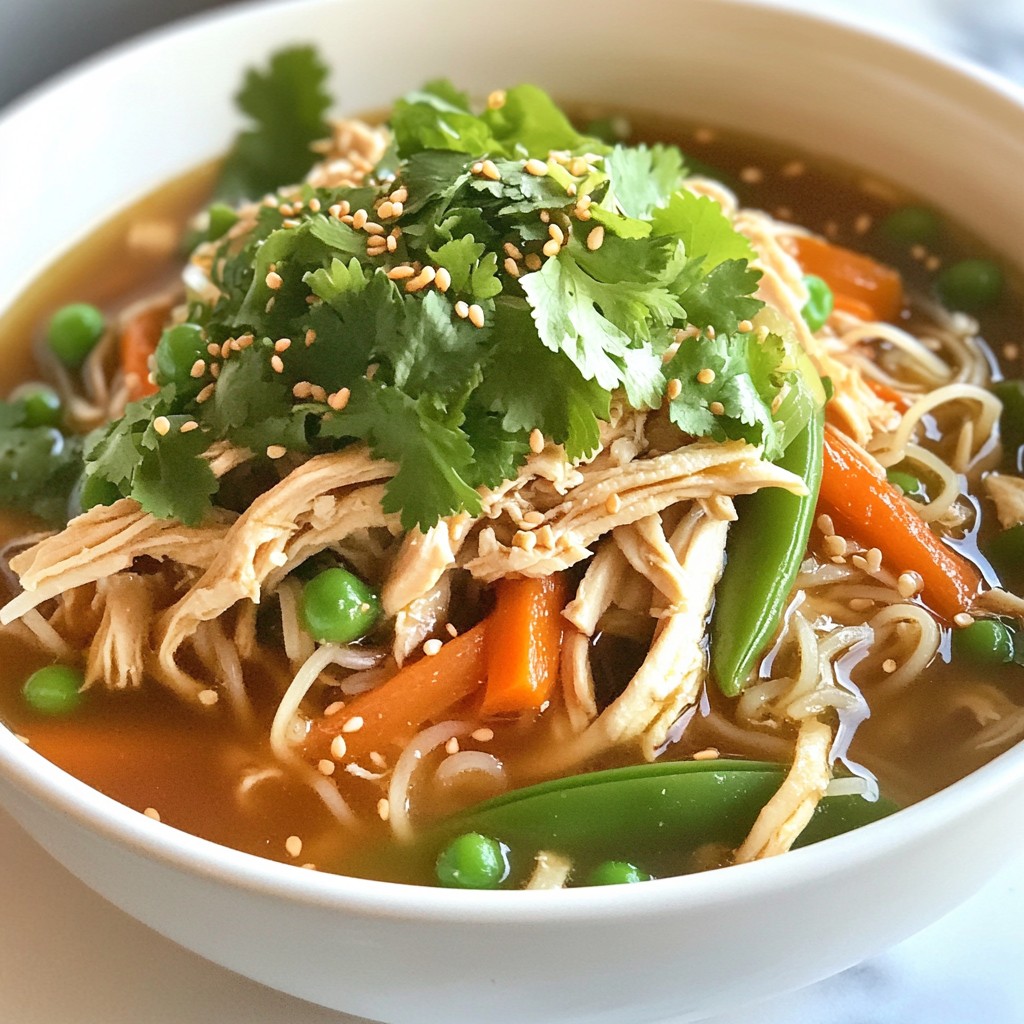
Looking for a warm, cozy meal? Let me introduce you to my Ginger Sesame Chicken Noodle Soup! This hearty dish is packed with tender chicken, vibrant veggies, and a burst of flavor from fresh ginger and sesame oil. Perfect for chilly nights, it warms you from the inside out. Ready to learn how to make this comfort bowl? Dive into the recipe, and let’s get cooking!
Why I Love This Recipe
- Comforting and Nourishing: This soup is a warm hug in a bowl, perfect for chilly days or when you're feeling under the weather.
- Quick and Easy: With a prep time of just 15 minutes, this dish comes together swiftly without sacrificing flavor.
- Healthy Ingredients: Packed with lean protein and colorful vegetables, this soup is both nutritious and satisfying.
- Customizable: You can easily swap in your favorite veggies or noodles to make this recipe your own!
Ingredients
Main Ingredients
- 2 boneless, skinless chicken breasts
- 4 cups chicken broth
- 2 tablespoons fresh ginger, grated
- 3 cloves garlic, minced
- 1 tablespoon sesame oil
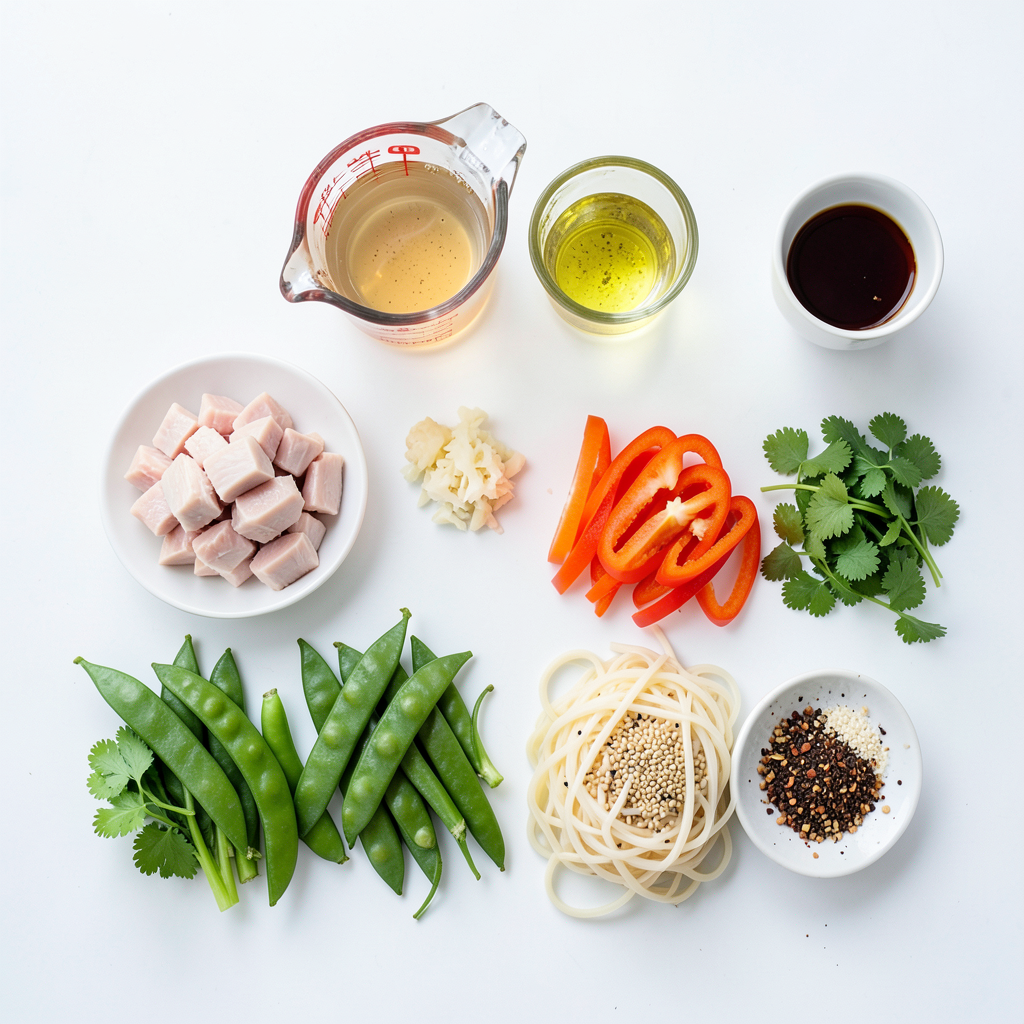
The chicken breasts give this soup a hearty base. The chicken broth adds depth of flavor. Fresh ginger and garlic bring warmth and a bright taste. Sesame oil adds a nutty finish that ties everything together.
Vegetables
- 2 carrots, julienned
- 1 bell pepper, thinly sliced (red or yellow)
- 1 cup snap peas, trimmed
- 4 green onions, chopped
These vegetables add crunch and color. Carrots bring sweetness, while bell peppers add a fresh taste. Snap peas give a nice pop, and green onions lend a mild onion flavor. Together, they make the soup feel bright and lively.
Noodles and Seasonings
- 200g rice noodles or egg noodles
- 2 tablespoons soy sauce (or tamari for gluten-free)
- 1 tablespoon sesame seeds
- 1 teaspoon chili flakes (optional for heat)
Noodles make this soup filling. You can choose rice or egg noodles based on your taste. Soy sauce deepens the umami flavor. Sesame seeds add a little crunch, while chili flakes can give it a kick if you want.
Step-by-Step Instructions
Preparing the Base
Start by heating one tablespoon of sesame oil in a big pot over medium heat. Add two tablespoons of freshly grated ginger and three minced garlic cloves. Sauté them for about two minutes until they smell great. This step builds the soup's base flavor.
Next, add two boneless, skinless chicken breasts to the pot. Stir them well to coat with the ginger and garlic mix. Season with salt and pepper to taste. Pour in four cups of chicken broth and bring everything to a gentle boil. Lower the heat, cover the pot, and let it simmer for 15-20 minutes. The chicken should cook through and become tender.
Shredding Chicken
Once the chicken is cooked, carefully remove it from the broth. Use two forks to shred it into pieces. This makes it easy to mix back into the soup. Return the shredded chicken to the pot, ensuring it absorbs all the tasty broth.
Adding Vegetables and Noodles
Now it's time to add some color and crunch. Toss in two julienned carrots, one thinly sliced bell pepper, and one cup of trimmed snap peas. Let everything simmer for an additional 5-7 minutes. You want the veggies to be tender-crisp.
While the veggies are cooking, prepare 200 grams of rice noodles or egg noodles in a separate pot. Follow the package directions, then drain them. Once the soup has simmered and the veggies are ready, stir in two tablespoons of soy sauce and optional chili flakes for a spicy kick.
Finally, mix in the cooked noodles with the soup. Stir gently until everything combines. Your Ginger Sesame Chicken Noodle Soup is now ready to serve!
Tips & Tricks
Perfecting the Flavor
To make your Ginger Sesame Chicken Noodle Soup shine, adjust the salt and pepper. Start with a pinch of salt and a dash of pepper. Taste the soup as you go. This way, you can find the right balance.
When browning garlic and ginger, heat the sesame oil first. Add the ginger and garlic to the pot. Stir them for about two minutes. This unlocks their strong flavors and makes the soup smell great. Keep an eye on them so they don’t burn.
Cooking Noodles
Avoid overcooking your noodles for the best texture. Follow the package instructions closely. Test them a minute or two before the time is up. They should be firm but tender. Drain and rinse them under cold water. This helps stop the cooking process and keeps them from sticking together.
Serving Suggestions
Garnishes make your soup look and taste better. Top your bowl with chopped green onions. Sprinkle sesame seeds for a nice crunch. Add fresh cilantro or parsley for a pop of color and flavor. These small touches make your soup inviting and fun to eat.
Pro Tips
- Enhance the Flavor: For an extra depth of flavor, consider marinating the chicken in a mixture of soy sauce, ginger, and garlic for at least 30 minutes before cooking.
- Vegetable Variations: Feel free to mix and match vegetables based on what you have on hand. Broccoli, bok choy, or mushrooms make excellent additions.
- Perfect Noodles: To prevent the noodles from becoming mushy, rinse them under cold water after cooking and toss them with a little sesame oil before adding them to the soup.
- Garnish for Freshness: Always garnish with fresh herbs just before serving to brighten the dish. You can also add a squeeze of lime for a zesty kick!
Variations
Protein Alternatives
You can easily change the protein in this soup. Tofu works well if you want a vegetarian option. Just cube it and add it with the vegetables. Shrimp is another great choice. Simply add it in the last few minutes of cooking. It cooks quickly and adds a nice flavor.
Vegetable Swaps
Feel free to mix up the veggies! Broccoli adds a nice crunch and a bright color. Zucchini slices are also tasty and cook fast. You can even use spinach or kale for extra greens. Just add these veggies when you add the others to keep them fresh and vibrant.
Gluten-Free Options
If you need a gluten-free meal, swap the noodles for gluten-free options. Rice noodles are a great choice. You can also use tamari instead of soy sauce. This keeps all the flavors while making it safe for gluten-free diets. Always check labels to ensure they meet your needs.
Storage Info
Refrigeration Guidelines
To store leftover soup, let it cool first. Pour the soup into airtight containers. Seal the lids tightly. Place the containers in the fridge. This helps keep the soup fresh. Consume the soup within three to four days. Always check for any off smells before eating.
Freezing the Soup
For freezing, use freezer-safe containers. Leave some space at the top for expansion. Label the containers with the date. The soup can last up to three months in the freezer. To reheat, thaw the soup overnight in the fridge. Heat it gently on the stove. Stir well to mix. You can add more broth if it seems too thick.
Shelf Life
In the fridge, the soup lasts three to four days. If you freeze it, it can last three months. For the best taste and quality, eat it sooner. Always check for freshness before enjoying your soup.
FAQs
Can I make this soup in advance?
Yes, you can make this soup ahead of time. To prepare, follow the recipe but skip adding the noodles. Cook the soup as directed and let it cool. Store the soup in an airtight container in the fridge for up to three days. When ready to serve, reheat the soup and add freshly cooked noodles. This way, your noodles stay firm and tasty.
What can I substitute for sesame oil?
If you don't have sesame oil, try using olive oil or sunflower oil. Both oils offer great flavor and work well in this recipe. You can also use peanut oil for a slightly nutty taste. Each substitute will slightly change the flavor, but the soup will still be delicious.
How do I reheat leftover soup?
To reheat leftover soup, use a pot on medium heat. Pour the soup into the pot and stir often. Heat until warm, but do not let it boil. You can also use a microwave. Place the soup in a microwave-safe bowl, cover it, and heat in short intervals. Stir between each interval for even warming. Enjoy your soup without losing its great taste!
You learned how to make a delicious chicken soup with fresh ingredients. We covered essential items, like chicken breasts, ginger, and various veggies. You also gained tips to perfect flavor and cook noodles just right. Consider alternatives like tofu or shrimp for variety. Proper storage ensures your soup lasts longer. Each step brings you closer to a tasty meal. Don't hesitate to try new flavors and ingredients. Enjoy your cooking journey!