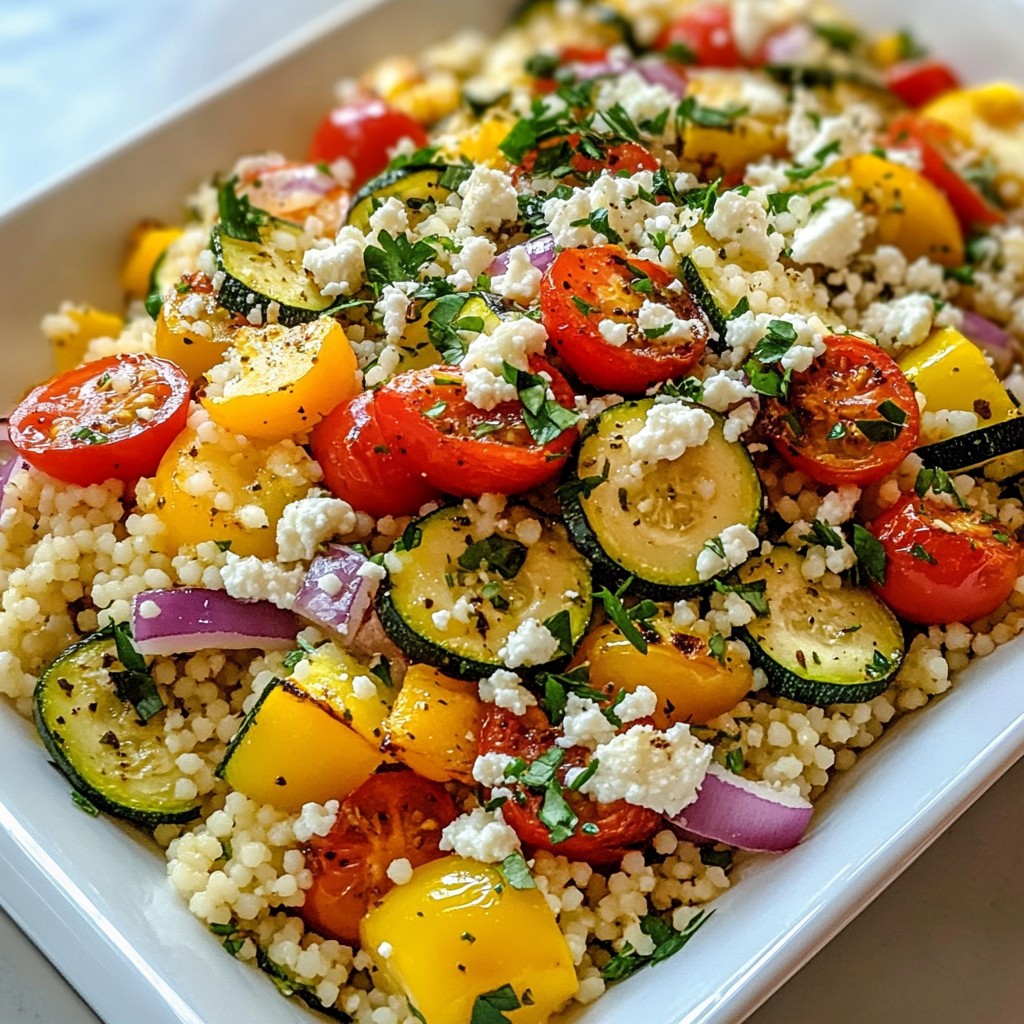
Are you ready to take your taste buds on a vibrant journey? My Mediterranean Roasted Vegetable Couscous recipe is packed with color, flavor, and healthy ingredients. In just a few easy steps, you'll learn how to combine fluffy couscous with perfectly roasted vegetables and zesty seasonings. With tips for variations and storage, this dish will be a new favorite at your table. Let’s dive into the delicious details!
Why I Love This Recipe
- Fresh and Colorful: This dish is bursting with vibrant vegetables that not only look appealing but also pack a nutritional punch.
- Quick and Easy: This recipe comes together in under an hour, making it perfect for busy weeknight dinners or meal prep.
- Versatile and Customizable: You can easily swap in your favorite vegetables or grains, allowing for endless variations.
- Deliciously Satisfying: The combination of roasted veggies, couscous, and olives creates a hearty meal that's full of flavor.
Ingredients
Main Ingredients
- 1 cup couscous
- 1 1/4 cups vegetable broth
- 1 zucchini, diced
- 1 bell pepper (any color), diced
- 1 red onion, chopped
- 1 cup cherry tomatoes, halved
- 1/2 cup Kalamata olives, pitted and sliced
- 1 teaspoon dried oregano
- 1 teaspoon garlic powder
- 1/2 teaspoon paprika
- Salt and pepper to taste
- 2 tablespoons olive oil
- Fresh parsley, chopped (for garnish)
- Crumbled feta cheese (optional, for serving)
Couscous is the heart of this dish. It cooks quickly and is fluffy. I use vegetable broth for a deep flavor. This makes the couscous tasty and rich.
Roasted vegetables bring color and sweetness. Zucchini, bell peppers, red onions, and cherry tomatoes work well. They add texture and healthy goodness. The roasting process draws out their natural sugars, creating a sweet, caramelized taste.
Seasonings enhance the dish. Dried oregano and garlic powder add depth. Paprika gives a gentle warmth. Salt and pepper balance the flavors. Toss everything together with olive oil to coat evenly. This step is key to ensure every bite is full of flavor.
Garnishes add the final touch. Fresh parsley gives a bright note. Crumbled feta cheese adds creaminess. You can skip the feta for a vegan option, but it adds a nice salty bite.
This dish is flexible. You can swap vegetables based on what you have. The key is to keep the flavors bright and fresh. Enjoy this Mediterranean delight as a main or side dish!
Step-by-Step Instructions
Prepping the Vegetables
1. First, preheat your oven to 400°F (200°C). This heat will help roast the vegetables perfectly.
2. Next, take a large mixing bowl. Add diced zucchini, bell pepper, chopped red onion, and halved cherry tomatoes.
3. Drizzle 2 tablespoons of olive oil over the veggies.
4. Sprinkle in 1 teaspoon of dried oregano, 1 teaspoon of garlic powder, and 1/2 teaspoon of paprika.
5. Add salt and pepper to taste. Toss everything well to coat every piece.
Cooking the Couscous
1. In a medium saucepan, bring 1 1/4 cups of vegetable broth to a boil.
2. Once the broth boils, remove it from heat. Stir in 1 cup of couscous.
3. Cover the pot with a lid and let it sit for 5 minutes. This step lets the couscous soak up the broth.
4. After 5 minutes, fluff the couscous with a fork to separate the grains.
Combining Ingredients
1. Once the vegetables are roasted and tender, mix them into the couscous.
2. Add 1/2 cup of sliced Kalamata olives for extra flavor.
3. Toss everything gently to combine.
4. Taste your dish and adjust seasonings as needed. Enjoy your beautiful meal!
Tips & Tricks
Best Practices for Roasting Vegetables
- Choosing the right vegetables: Select fresh, colorful veggies. Zucchini, bell peppers, and cherry tomatoes work great. They roast well and add flavor. You can mix in other favorites too. Eggplant and asparagus are nice choices.
- Ensuring even cooking: Cut your vegetables into similar sizes. This helps them cook at the same rate. Spread them out on the baking sheet. Avoid crowding the pan to get that nice caramelization.
Couscous Cooking Tips
- Avoiding mushy couscous: Use the right amount of broth. For one cup of couscous, use 1.25 cups of broth. Let it sit covered for five minutes. Fluff it gently with a fork to keep it light.
- Flavoring your broth: Use vegetable broth for a tasty base. You can add herbs or spices to it. A bay leaf or some garlic can boost the flavor.
Serving Suggestions
- Pairing with proteins: This dish is versatile. You can add grilled chicken for a hearty meal. Chickpeas are great for a vegan option. They add protein and texture.
- Garnishing ideas: Fresh parsley adds a pop of color. Crumbled feta cheese gives a creamy touch. A drizzle of olive oil can enhance the taste too.
Pro Tips
- Choose Fresh Veggies: Use the freshest vegetables you can find for the best flavor and texture. Seasonal produce enhances the dish significantly.
- Customize Your Couscous: Experiment with different herbs and spices in the couscous to complement the roasted vegetables. A pinch of cumin or lemon zest can add a delightful twist.
- Olive Oil Matters: High-quality olive oil will elevate your dish. Consider using a flavored olive oil, like garlic or herb-infused, for an extra layer of flavor.
- Perfect Roasting: Ensure the vegetables are spread out in a single layer on the baking sheet to promote even roasting and caramelization.
Variations
Different Vegetable Options
You can use many seasonal vegetables in this dish. Zucchini, bell peppers, and cherry tomatoes work well. You might try adding asparagus, eggplant, or squash. These veggies bring great color and taste. If fresh vegetables are not available, frozen ones are a good choice. Frozen veggies also save time. Just be sure to thaw and drain them before roasting.
Adding Proteins
To make this dish heartier, add proteins. Chickpeas are a great choice for a plant-based option. They blend well with the flavors. If you prefer meat, grilled chicken complements the dish nicely. You can also try shrimp or tofu for variety. These options make it more filling and nutritious.
Flavor Profile Variations
Switching up seasonings can change the flavor a lot. You might use thyme or rosemary instead of oregano. Adding crushed red pepper gives it a spicy kick. Different olives or cheeses can also change the taste. Try using green olives for a tangy twist. If you love cheese, feta adds a creamy touch. Each small change can lead to a unique dish every time.
Storage Info
Refrigeration Tips
Store leftovers in an airtight container. This keeps the couscous fresh. Glass or plastic containers work well. Make sure they are clean and dry before use. Let the dish cool to room temperature before sealing. This helps prevent sogginess.
Freezing Instructions
To freeze couscous dishes, let them cool completely. Scoop servings into freezer bags or containers. Remove as much air as possible before sealing. This prevents freezer burn. To thaw, place the container in the fridge overnight. Reheat in the microwave or on the stove. Add a splash of broth to keep it moist.
Shelf Life
In the fridge, Mediterranean roasted vegetable couscous lasts about 3 to 5 days. Check for signs of spoilage before eating. If it smells sour or looks discolored, toss it out. Fresh ingredients help keep the dish tasty and safe. Always trust your nose and eyes!
FAQs
What is couscous made from?
Couscous comes from durum wheat. It is a tiny pasta shaped like grains. The wheat is steamed and dried. This method gives couscous its light and fluffy texture. You can find couscous in many dishes, especially in North African cooking.
Can I make this recipe ahead of time?
Yes, you can prepare this dish in advance. Cook the couscous and roast the veggies separately. Store them in airtight containers. When ready to eat, just mix and warm them together. This makes meal prep easy and saves time.
What can I serve with Mediterranean Roasted Vegetable Couscous?
This couscous pairs well with many sides and mains. Try serving it with grilled chicken or fish. You can also add a fresh salad or some hummus. For a vegetarian option, serve with falafel or roasted chickpeas. Enjoying this couscous with a variety of dishes makes it fun and tasty!
Cooked correctly, Mediterranean Roasted Vegetable Couscous shines with flavor and color. Start with the main ingredients, like couscous, roasted vegetables, and simple seasonings. Follow the steps to prep your veggies, cook the couscous, and combine. Use tips for perfect roasting and cooking. Don't shy away from variations—get creative with different veggies and proteins. Finally, store leftovers properly to enjoy later. With these ideas, you can make a tasty meal that’s satisfying and fun. Dive in, experiment, and share your success!