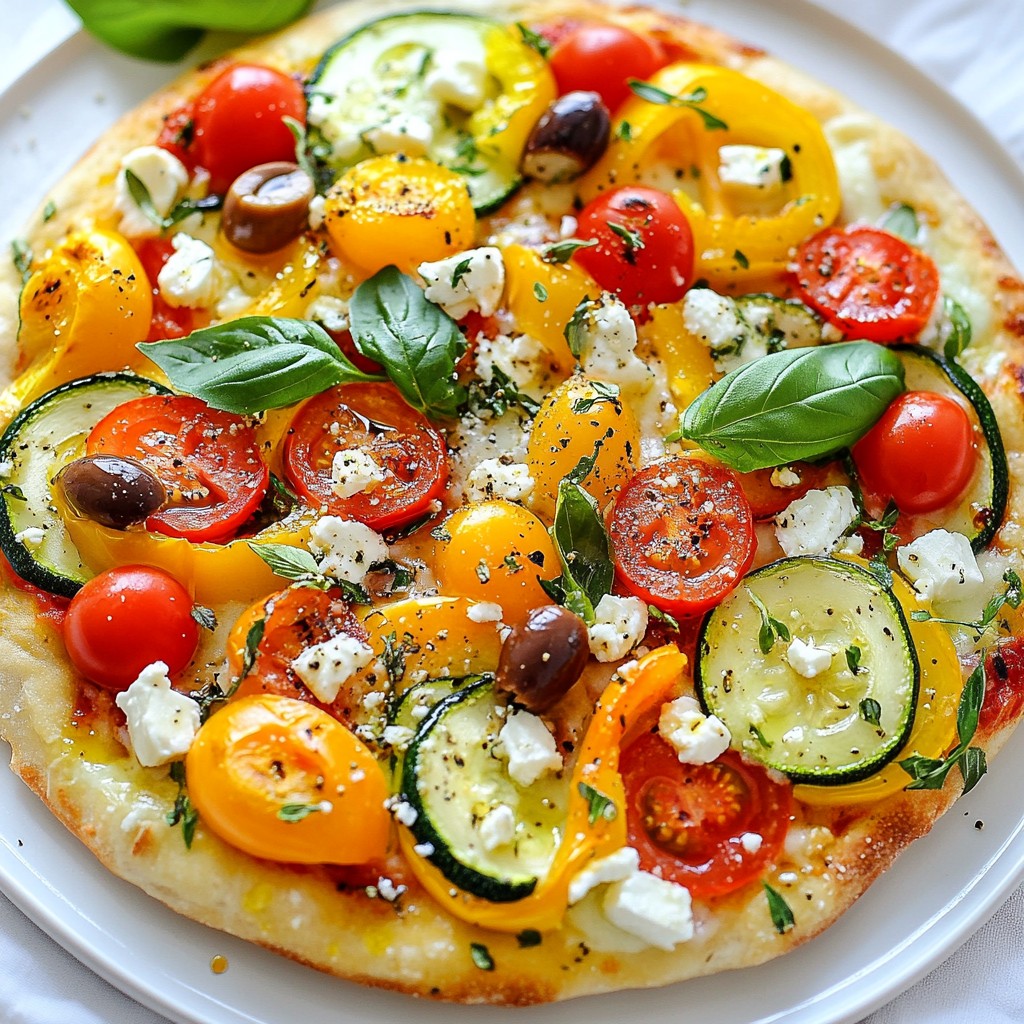
Are you ready to bring delicious Mediterranean flavors to your kitchen? This Mediterranean Veggie Pizza recipe is not only tasty but also easy to make. You'll learn how to pick fresh veggies, create a crispy crust, and layer yummy ingredients like a pro. Whether you're cooking for a crowd or just yourself, this pizza is sure to impress. Let’s dive into this flavorful and satisfying recipe that will make your taste buds dance!
Why I Love This Recipe
- Fresh and Flavorful: This Mediterranean Veggie Pizza is packed with vibrant vegetables that add a burst of flavor to every bite.
- Customizable: You can easily swap out the veggies based on your preferences or what you have on hand, making it a versatile dish.
- Quick and Easy: With a total prep and cook time of just 30 minutes, it's perfect for a weeknight dinner.
- Healthy Option: This pizza is a great way to enjoy a delicious meal while incorporating plenty of vegetables into your diet.
Ingredients
List of Ingredients for Mediterranean Veggie Pizza
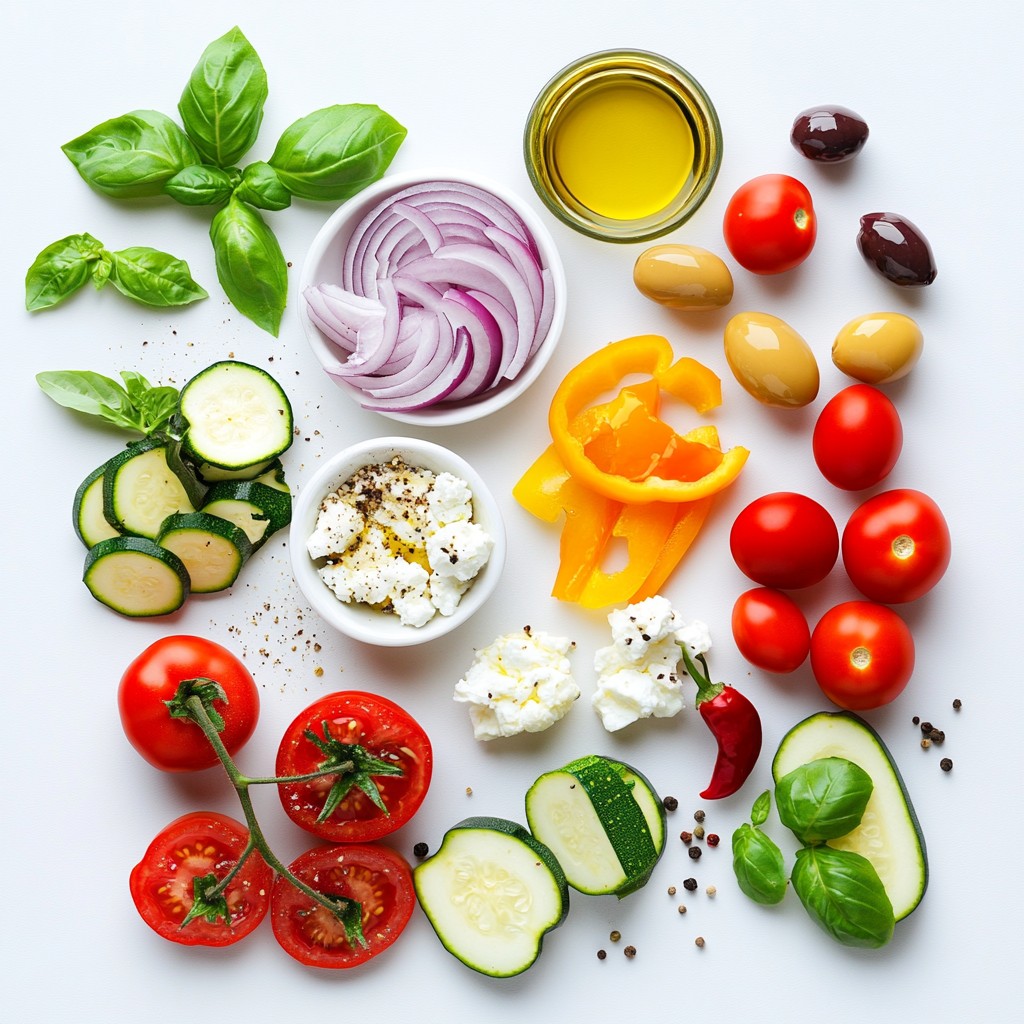
To make Mediterranean Veggie Pizza, gather these simple ingredients:
- 1 pre-made pizza crust (store-bought or homemade)
- 1/2 cup pizza sauce (store-bought or homemade)
- 1 cup shredded mozzarella cheese
- 1/2 cup crumbled feta cheese
- 1/2 cup Kalamata olives, pitted and sliced
- 1 medium zucchini, thinly sliced
- 1 bell pepper (red or yellow), thinly sliced
- 1 small red onion, thinly sliced
- 1 cup cherry tomatoes, halved
- 2 tablespoons olive oil
- 1 teaspoon dried oregano
- 1 teaspoon garlic powder
- Salt and pepper to taste
- Fresh basil leaves for garnish
Suggested Variations for Ingredients
You can change things up with these fun variations:
- Use different cheese like goat cheese or provolone.
- Swap zucchini for eggplant or mushrooms.
- Try spinach or arugula instead of basil.
- Add cooked chicken or chickpeas for extra protein.
- Use a cauliflower crust for a low-carb option.
Tips for Choosing Fresh Vegetables
Choosing fresh veggies is key for great flavor. Here are some tips:
- Look for bright colors; they mean the veggies are fresh.
- Check for firmness; soft or wrinkled veggies are not good.
- Smell the veggies; fresh ones should have a nice scent.
- Buy in-season produce for the best taste and price.
- Visit local markets for the freshest options.
With these ingredients and tips, you can create a tasty Mediterranean Veggie Pizza that shines with flavor. Enjoy experimenting with fresh vegetables and different toppings!
Step-by-Step Instructions
How to Prepare the Pizza Crust
To start, preheat your oven to 475°F (245°C). This hot temperature makes sure your crust gets crispy. If you have a store-bought crust, just unroll it. If it’s homemade, roll it out on a floured surface until it’s even. Place the crust on a baking sheet or a pizza stone. Make sure it is flat and round.
Layering the Ingredients
Now it’s time to add flavor! Spread 1/2 cup of pizza sauce evenly on the crust. Leave a small edge for the crust. Next, sprinkle 1 cup of shredded mozzarella cheese over the sauce.
In a bowl, mix the sliced zucchini, bell pepper, red onion, and cherry tomatoes. Drizzle 2 tablespoons of olive oil over the veggies. Add 1 teaspoon of dried oregano, 1 teaspoon of garlic powder, and some salt and pepper to taste. Toss everything together so the veggies are coated well.
Layer the mixed veggies on top of the cheese. Then, add 1/2 cup of sliced Kalamata olives and 1/2 cup of crumbled feta cheese on top.
Baking Tips for Perfect Pizza
Bake your pizza in the preheated oven for 12 to 15 minutes. Watch for the crust to turn golden and the cheese to bubble and brown slightly. When done, take it out of the oven. Let it cool for a couple of minutes before slicing.
Finally, add fresh basil leaves on top for a nice touch and extra flavor. Enjoy your Mediterranean veggie pizza!
Tips & Tricks
Achieving a Crispy Crust
To get a crispy crust, start by preheating your oven to 475°F (245°C). A hot oven helps create that crunch we all love. If you use a pizza stone, let it heat for at least 30 minutes. The stone holds heat well and cooks the base evenly. If you use a baking sheet, make sure it's also hot. This will help avoid a soggy bottom.
Enhancing Flavor with Herbs and Spices
Herbs and spices can make your pizza pop. I love using dried oregano and garlic powder. Just sprinkle them on the vegetables before you layer them on the pizza. This adds depth to each bite. Fresh herbs like basil can also enhance the taste. Add them right before serving to keep their bright flavor.
Recommended Tools for Pizza Making
Using the right tools can make pizza making easier. A rolling pin helps shape the crust evenly. A pizza peel is great for transferring the pizza to and from the oven. If you want to bake on a stone, a pizza cutter is a must for easy slicing. Lastly, a mixing bowl helps toss your veggies with oil and spices. These tools can improve your pizza game.
Pro Tips
- Use Fresh Ingredients: Always opt for fresh vegetables and herbs to enhance the flavor of your pizza. Fresh basil, in particular, adds a vibrant aroma that complements the Mediterranean theme.
- Experiment with Cheese: While mozzarella and feta are classic choices, feel free to experiment with other cheeses like goat cheese or ricotta for a unique flavor profile.
- Pre-roast Vegetables: For a deeper flavor, consider roasting the zucchini and bell peppers before adding them to the pizza. This will caramelize their sugars and intensify their taste.
- Perfect Your Crust: If using a pre-made crust, follow package instructions carefully. For homemade crust, ensure it is well-kneaded and allowed to rest for the best texture.
Variations
Gluten-Free Mediterranean Veggie Pizza
You can enjoy a gluten-free Mediterranean veggie pizza. Use gluten-free pizza crust instead of regular. Many stores sell tasty gluten-free options. If you prefer homemade, just use gluten-free flour. The rest of the recipe stays the same. Your favorite toppings still shine.
Mediterranean Veggie Pizza with Different Cheeses
Changing the cheese can make your pizza unique. Try using provolone or goat cheese instead of mozzarella. These cheeses add different flavors and textures. You can also mix cheeses for a richer taste. A blend of mozzarella and feta works great. It gives you that creamy goodness while keeping the pizza light.
Adding Proteins to the Pizza
Need more protein? Add cooked chicken or shrimp on top. These options pair well with veggies and cheese. You can even use chickpeas for a vegetarian twist. Just sprinkle them on before baking. This adds a nice crunch and heartiness to your dish.
Storage Info
How to Store Leftover Pizza
To store leftover pizza, let it cool down first. Then, wrap each slice in plastic wrap. You can also use aluminum foil. Place the wrapped slices in an airtight container. This helps keep the pizza fresh. Store it in the fridge for up to three days.
Reheating Tips for Maximum Freshness
When you’re ready to eat, preheat your oven to 350°F (175°C). Place the pizza slices on a baking sheet. Heat for about 10-15 minutes, or until warm. This keeps the crust crispy. You can also use a skillet. Heat it over medium heat for about 5-7 minutes. Cover it with a lid to keep moisture in.
Freezing Mediterranean Veggie Pizza
You can freeze the pizza for later use. Wrap each slice tightly in plastic wrap. Then, place them in a freezer bag. Make sure to remove as much air as possible. Label the bag with the date. You can freeze it for up to two months. When you’re ready to eat, thaw in the fridge overnight. Then, reheat as mentioned above.
FAQs
Can I make my own pizza sauce?
Yes, you can make your own pizza sauce! Start with canned tomatoes or tomato paste. Add some olive oil, salt, and pepper for taste. You can also mix in garlic, basil, or oregano for extra flavor. Cook it on low heat for about 20 minutes. This way, you control the taste and freshness.
What are some good side dishes to pair with Mediterranean Veggie Pizza?
Several side dishes go well with Mediterranean Veggie Pizza. Here are a few ideas:
- A fresh garden salad with lemon dressing
- Roasted vegetables like bell peppers and zucchini
- Grilled eggplant slices with balsamic glaze
- Garlic bread or breadsticks for dipping
These dishes add more flavors to your meal and balance the pizza.
How can I adjust the spice levels in the recipe?
Adjusting spice levels is easy! If you want more heat, add red pepper flakes on top. For a milder pizza, skip the flakes or use less garlic powder. You can also try different herbs like thyme or rosemary to change the taste. Always taste as you go to find your perfect balance.
We explored how to make a Mediterranean veggie pizza from start to finish. From choosing fresh ingredients to perfecting that crispy crust, each step matters. You can customize the pizza with different cheeses or proteins. Don’t forget to store your leftovers, and you'll enjoy them later!
Cooking should be fun and simple. I hope this guide helps you create delicious pizzas at home. Dive in, be creative, and enjoy every bite!