
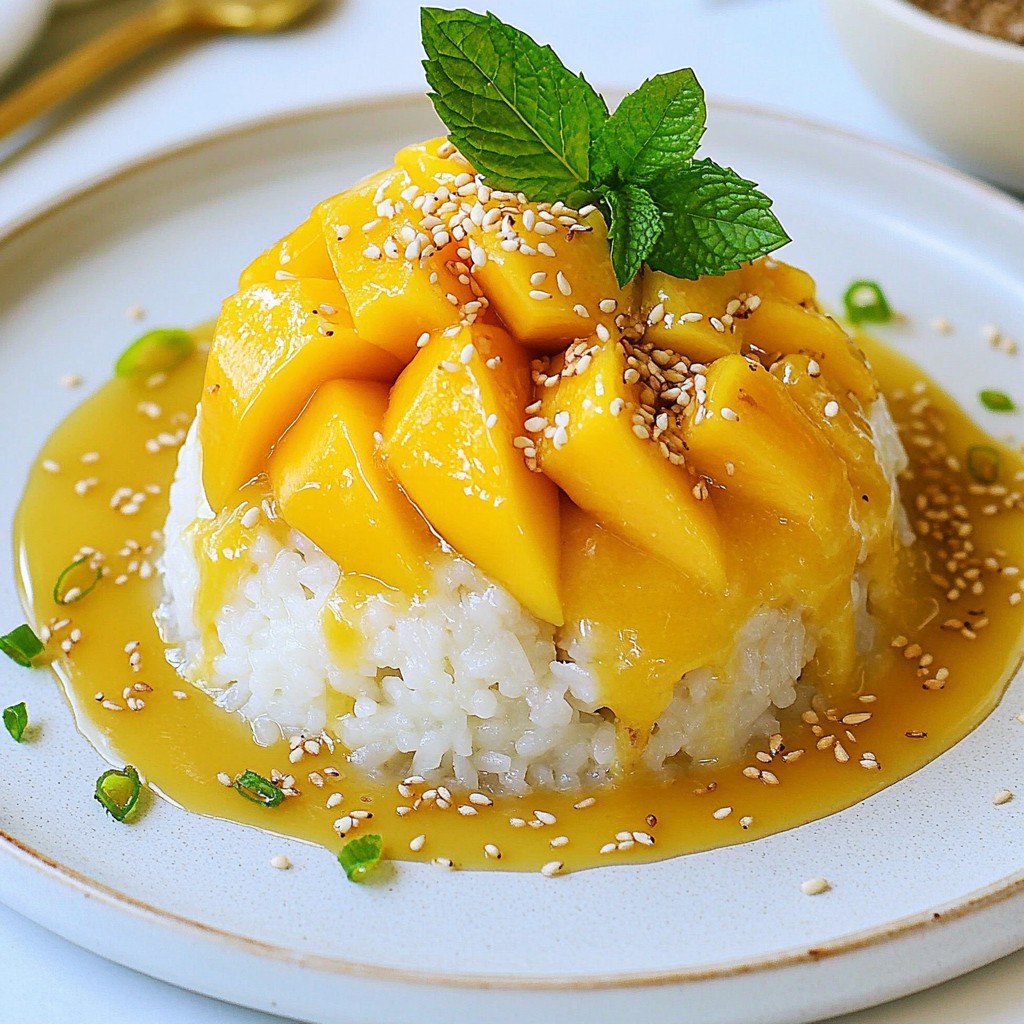
If you're looking for a sweet treat that combines creamy coconut with juicy mango, you've found it! Thai Mango Sticky Rice is a beloved dessert that brings a taste of Thailand to your kitchen. In this recipe, I’ll guide you step-by-step to create this irresistible dish at home. Get ready for a delightful mix of textures and flavors that will impress family and friends alike! Let's dive into this delicious journey!
Why I Love This Recipe
- Deliciously Sweet and Creamy: The combination of ripe mangoes and rich coconut milk creates a luscious dessert that is both refreshing and satisfying.
- Simple Ingredients: This recipe requires only a few basic ingredients, making it easy to prepare without any complicated steps.
- Versatile Presentation: You can serve this dish in various ways, whether on a plate or a banana leaf, allowing for creativity in presentation.
- Perfect for Any Occasion: This dessert is ideal for celebrations, gatherings, or simply as a delightful treat after a meal.
Ingredients
Main Ingredients
- 1 cup glutinous rice (sticky rice)
- 1 1/2 cups coconut milk
- 1/2 cup sugar
- 1/4 teaspoon salt
- 2 ripe mangoes, peeled and sliced
Optional Ingredients
- 1 tablespoon sesame seeds
- Fresh mint leaves for garnish
Essential Equipment
- Steamer
- Cheesecloth
- Saucepan
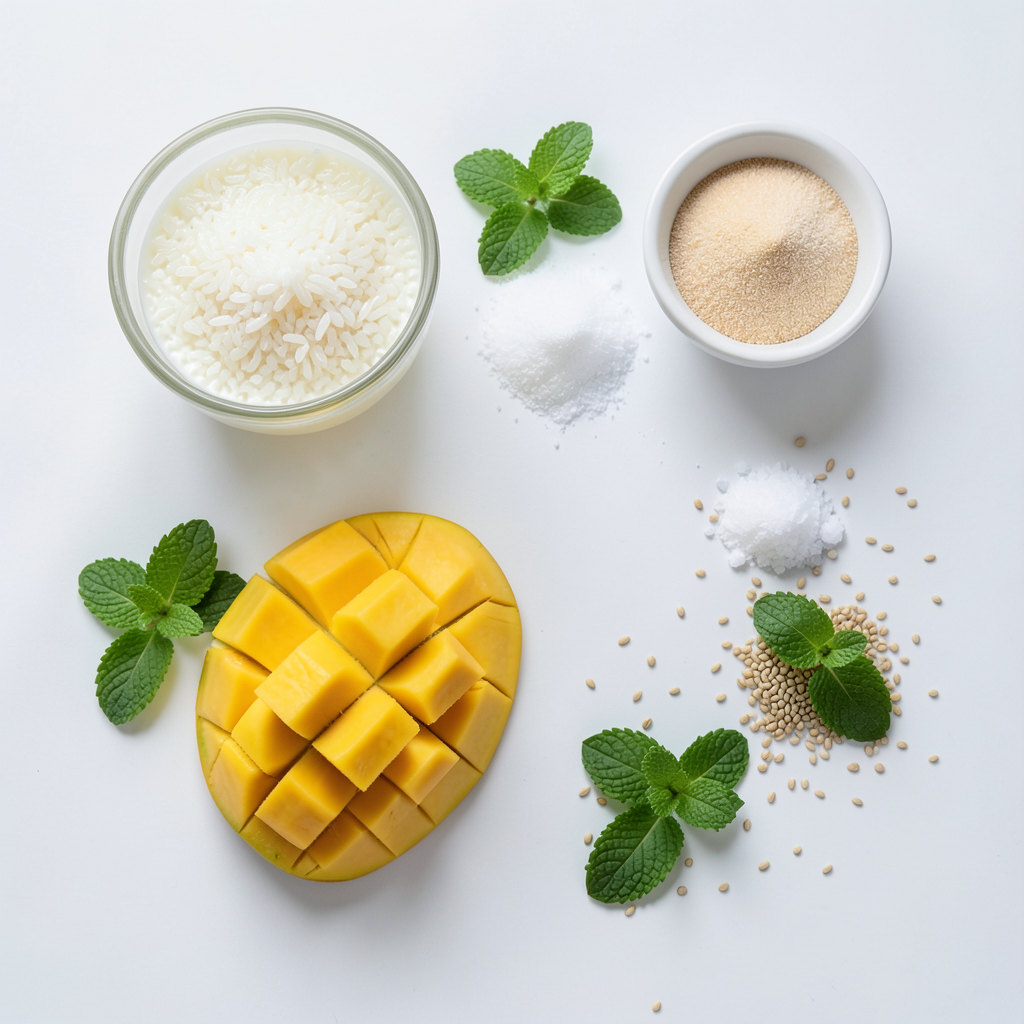
Gathering the right ingredients is key to making Thai mango sticky rice. You will need glutinous rice, which gives the dish its signature stickiness. Coconut milk adds rich flavor and creaminess. Sugar sweetens the dish, while salt balances the taste. Ripe mangoes add a refreshing touch.
For a little extra flair, you can sprinkle sesame seeds on top. Fresh mint leaves make a lovely garnish.
You also need a few essential tools. A steamer is perfect for cooking the rice. Cheesecloth keeps the rice contained while it cooks. A saucepan is needed to prepare the coconut sauce.
Once you have everything ready, you can start making this delicious dessert!
Step-by-Step Instructions
Soaking the Sticky Rice
First, rinse the glutinous rice under cold water. You want the water to run clear. This step removes excess starch. Next, soak the rice in water for at least 4 hours. If you can, let it soak overnight. This helps the rice absorb water and cook evenly.
Steaming the Rice
Prepare your steamer by lining it with cheesecloth. After soaking, drain the rice and place it in the steamer. Steam the rice for about 20-25 minutes. You will know it's ready when the grains turn translucent and sticky. This is the perfect texture for our dish.
Making the Coconut Sauce
While the rice steams, it's time to make the coconut sauce. In a saucepan over medium heat, mix the coconut milk, sugar, and salt. Stir it well until the sugar dissolves. Avoid boiling the mixture as it can change the sauce's texture. Reserve about 1/4 cup of this sauce for drizzling later.
Combining Ingredients
Once the rice is cooked, transfer it to a large bowl. Pour the remaining coconut sauce over the rice. Gently fold the rice so every grain gets coated. Let it sit for about 10 minutes. This resting time allows the flavors to meld beautifully.
Serving the Dish
To serve, scoop a generous portion of sticky rice onto a plate. Arrange the sliced mangoes next to it. Drizzle the reserved coconut sauce over the top for a touch of sweetness. If you like, sprinkle sesame seeds on the rice. Fresh mint leaves can add a nice pop of color.
Tips & Tricks
Perfecting the Sticky Rice Texture
To make the best sticky rice, soak it well. I suggest soaking for at least 4 hours. If you want a softer texture, soak overnight. This helps the grains absorb water and become chewy.
For steaming, use a steamer basket lined with cheesecloth. This keeps the rice from falling through. Steam over simmering water for 20 to 25 minutes. The rice should look translucent and sticky when done. If it is not sticky enough, steam it a little longer.
Coconut Sauce Adjustments
You can adjust the sweetness of the coconut sauce. If you like it sweeter, add more sugar. For less sweetness, reduce the sugar. Taste as you mix. The salt balances the sweetness, so don’t skip it.
If you have extra coconut sauce, store it in the fridge. Use an airtight container. It stays good for about a week. You can warm it up later to drizzle on more desserts.
Presentation Ideas
How you plate the dish is key. Use a vibrant plate or a banana leaf for that authentic look. To make it pretty, create a swirled design with the coconut sauce. Arrange the mango slices in a fan shape next to the sticky rice.
For extra flair, consider garnishing with fresh mint leaves. You can also use toasted coconut flakes or chopped nuts. These add flavor and a nice crunch.
Pro Tips
- Perfect Rice Texture: Make sure to soak the glutinous rice for at least 4 hours or overnight. This will help achieve the ideal sticky texture when steamed.
- Coconut Sauce Consistency: Stir the coconut milk mixture gently over medium heat to dissolve the sugar without boiling. This will keep the sauce smooth and creamy.
- Mango Ripeness: Choose ripe mangoes that yield slightly when pressed. They should be fragrant and sweet for the best flavor pairing with the sticky rice.
- Garnishing Tips: For an added touch, consider toasting sesame seeds before sprinkling them on top. Fresh mint leaves can also enhance the dish's presentation and freshness.
Variations
Regional Variations
Thai mango sticky rice changes by region. In central Thailand, you find the classic version, rich with coconut and sweet mango. The north may add a touch of salt for balance. In the south, you might see more tropical fruits like durian or jackfruit paired with the dish. Each region brings its own flair and flavor twist.
Feel free to swap out mango with your favorite fruits. Pineapple, dragon fruit, or even strawberries can add fun colors and tastes. Each fruit brings a new twist to this beloved dessert.
Dietary Modifications
This dessert can easily fit into different diets. For a vegan version, simply use coconut milk and skip any dairy. The recipe is naturally gluten-free since it uses glutinous rice. This makes it a great option for those with gluten sensitivities. Always check labels for packaged ingredients to ensure they are gluten-free.
Creative Twists
Get creative by adding flavors! Consider mixing in a bit of lime zest for brightness or a dash of vanilla for warmth. You could also try making a pandan sauce instead of coconut sauce for a unique green hue and taste.
For serving, think outside the box. Instead of a plate, use a banana leaf for a traditional touch. You could also layer the sticky rice and fruit in a glass for a beautiful dessert parfait. These fun twists keep the dish fresh and exciting for every occasion.
Storage Info
Storing Leftovers
To keep your Thai mango sticky rice fresh, store leftovers properly. First, let the rice cool down to room temperature. Use airtight containers to prevent moisture loss.
- Place the sticky rice in one container.
- Store the coconut sauce in another container.
This helps keep both parts tasty and fresh. I recommend using glass containers, as they do not absorb smells or colors.
Reheating Instructions
When you are ready to enjoy leftovers, you can revive the sticky rice. The best way is to use a steamer or microwave.
- For steaming, add a few drops of water, then steam for about 5 minutes.
- For the microwave, cover the rice with a damp paper towel and heat in 30-second bursts until warm.
To heat the coconut sauce, pour it into a saucepan. Warm it over low heat. Stir gently to keep it smooth and tasty.
Freezing Options
You can freeze Thai mango sticky rice if you have extra. Just remember to store it properly.
- First, place portions of the sticky rice in freezer bags.
- Make sure to squeeze out all the air before sealing.
For the coconut sauce, freeze it in ice cube trays. Once frozen, transfer cubes to a bag. When you want to eat, thaw the rice in the fridge overnight.
- Reheat as mentioned above.
- For the sauce, heat it gently in a saucepan.
This way, you can enjoy this delightful dessert anytime!
FAQs
What is Thai Mango Sticky Rice traditionally served with?
Thai Mango Sticky Rice is often served as a sweet treat. It pairs well with ripe mangoes. You can also add crunchy sesame seeds for a nice touch. Some people enjoy it with a sprinkle of toasted coconut. Fresh mint leaves add a pop of color and flavor too. This dessert shines on its own, but these extras enhance the experience.
Can I use regular rice instead of glutinous rice?
Using regular rice changes the dish. Glutinous rice is sticky and chewy, which is key for this dessert. Regular rice will not have the same texture or taste. It can become dry and crumbly. Glutinous rice absorbs the coconut milk well, making it creamy and rich. For the best flavor and texture, stick with glutinous rice.
How long can I store Thai Mango Sticky Rice?
Thai Mango Sticky Rice stays fresh for about two days in the fridge. Keep it in an airtight container to maintain its taste. If you want to store it longer, freeze it. Frozen sticky rice lasts about one month. When ready to eat, thaw it in the fridge overnight, then reheat gently. This keeps the rice moist and tasty.
Thai Mango Sticky Rice is a delicious treat with simple ingredients. You learned about the main components like glutinous rice, coconut milk, and mangoes. I shared tips on cooking and serving, plus variations to try. Remember to soak the rice well and adjust the coconut sauce to your taste. With these steps, you can impress with this classic dessert. Enjoy your cooking journey, and savor every bite!