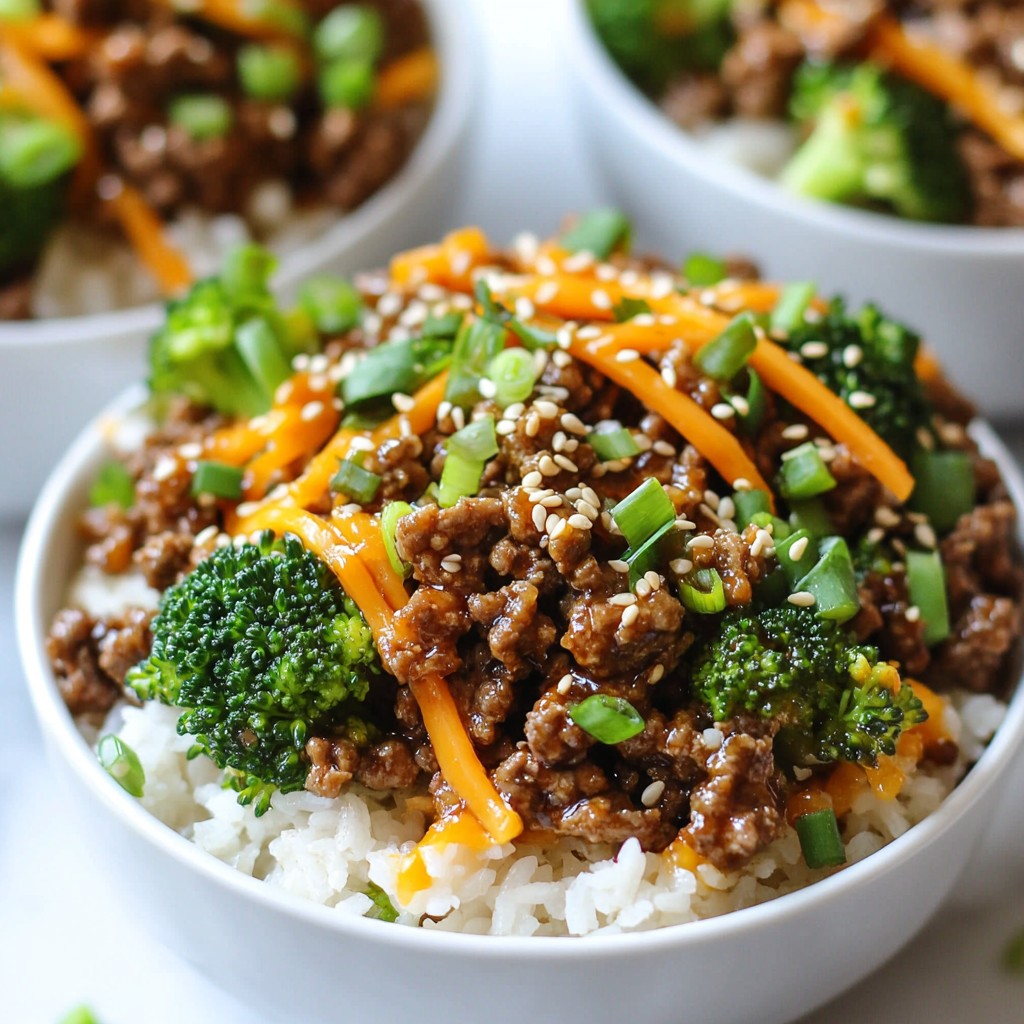
Craving a meal that’s both spicy and satisfying? You’re in the right place! I’ll guide you through making Spicy Meal Prep Korean Beef Bowls that are quick and easy to whip up. With ground beef, fresh veggies, and bold flavors, these bowls are perfect for tasty lunches or dinners. Get ready to enjoy a delicious dish that doesn’t take hours to prepare! Let’s dive into this simple recipe.
Why I Love This Recipe
- Quick and Easy: This recipe takes only 30 minutes from start to finish, making it perfect for busy weeknights.
- Flavorful: The combination of gochujang, garlic, and ginger creates a robust and spicy flavor that is sure to impress.
- Healthy Ingredients: Packed with vegetables like broccoli and carrots, this dish is both nutritious and satisfying.
- Meal Prep Friendly: These bowls are great for meal prep, allowing you to enjoy delicious meals throughout the week.
Ingredients
Main Ingredients
- 1 lb ground beef (or lean ground turkey)
- 1 tablespoon sesame oil
- 3 cloves garlic, minced
- 1-inch piece ginger, grated
Flavor Enhancers
- 4 tablespoons soy sauce (low sodium)
- 2 tablespoons gochujang (Korean chili paste)
- 1 tablespoon brown sugar
- 1 tablespoon rice vinegar
Vegetables and Garnishes
- 1 cup broccoli florets
- 1 cup shredded carrots
- 2 green onions, chopped
- Sesame seeds for garnish
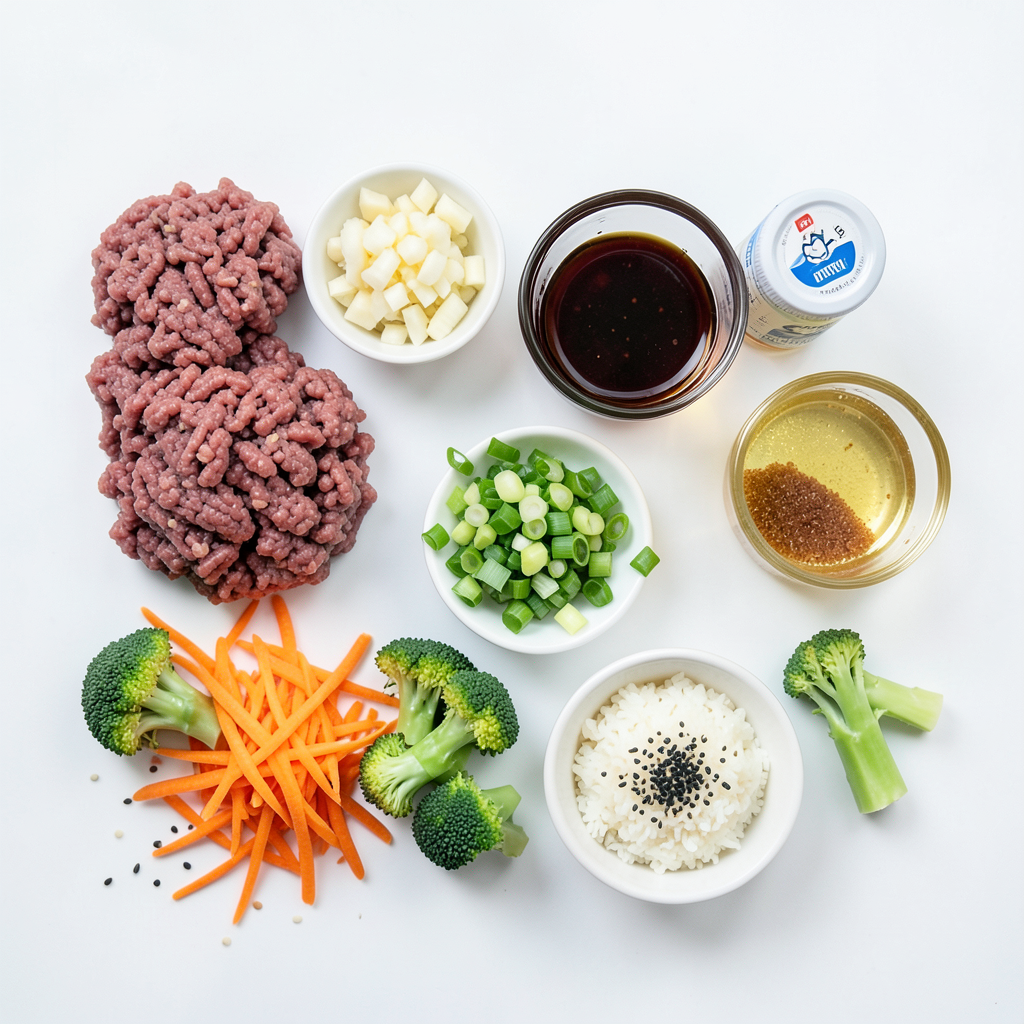
For these spicy meal prep Korean beef bowls, you need a mix of fresh and flavorful ingredients. First, I like using ground beef or lean ground turkey as the base. It cooks fast and absorbs the flavors well. The sesame oil adds a nice nutty taste, while garlic and ginger give it a fresh kick.
Next, you need flavor enhancers. Low-sodium soy sauce brings umami, and gochujang adds spice. Brown sugar balances the heat, and rice vinegar gives a touch of tartness.
Don’t forget the vegetables! Broccoli and shredded carrots add color and crunch. Green onions and sesame seeds make the bowls look nice and add extra flavor. This mix of ingredients creates a tasty and satisfying meal prep option.
Step-by-Step Instructions
Cooking the Beef
1. Heat a large skillet over medium heat. Add 1 tablespoon of sesame oil.
2. Mince 3 cloves of garlic and grate a 1-inch piece of ginger.
3. Sauté the garlic and ginger in the oil for about 1 minute.
4. Add 1 pound of ground beef to the skillet.
5. Break the meat apart with a spatula. Brown it for about 5-7 minutes.
Preparing the Sauce
1. In a small bowl, mix together 4 tablespoons of soy sauce and 2 tablespoons of gochujang.
2. Add 1 tablespoon of brown sugar and 1 tablespoon of rice vinegar to the bowl.
3. Once the beef is browned, pour the sauce over it.
4. Stir well to combine and let it simmer for 2-3 minutes.
Cooking the Vegetables
1. In the same skillet, add 1 cup of broccoli florets and 1 cup of shredded carrots.
2. Stir the vegetables into the beef mixture.
3. Cook for 3-4 minutes. Make sure the vegetables stay tender yet crisp.
Assembling the Bowls
1. Divide 2 cups of cooked rice into meal prep containers.
2. Top each portion with the spicy beef and vegetable mixture.
3. Garnish with 2 chopped green onions and a sprinkle of sesame seeds.
Tips & Tricks
Meal Prep Tips
- How to save time during cooking
Prepare all your ingredients before you start cooking. Chop the garlic, ginger, and veggies first. This way, you can cook without stopping. Cook rice ahead of time too. You can store it in the fridge.
- Best storage containers for meal prep
Use clear, airtight containers for your meal prep. This helps you see what’s inside. Look for containers that are microwave-safe. They make reheating easy.
Cooking Techniques
- Tips for browning ground beef
Start with a hot skillet. This helps the beef brown well. Break it into small pieces with a spatula as it cooks. This way, it cooks evenly. Don’t stir too much. Let it sit to get nice color.
- Ensuring vegetables are perfectly cooked
Add your vegetables after the beef cooks. Stir them in and cook just until they are bright and crisp. This keeps them from getting mushy. Always watch them closely to avoid overcooking.
Flavor Adjustments
- Altering spice levels for personal preference
Adjust the gochujang to change the heat. Add less for a milder dish. You can also add a pinch of sugar to balance the heat. Taste as you go.
- Ingredient substitutions for dietary needs
If you want a leaner option, use ground turkey instead of beef. For a vegetarian dish, try using lentils or tofu. You can swap rice for quinoa or cauliflower rice too.
Pro Tips
- Choose Your Meat Wisely: For a healthier option, use lean ground turkey instead of beef, which still provides great flavor while reducing fat content.
- Adjust the Spice Level: If you prefer a milder dish, reduce the amount of gochujang or substitute it with a less spicy sauce.
- Meal Prep Efficiently: Cook extra rice and keep it refrigerated or frozen for quick meal prep in the future.
- Garnish for Extra Flavor: Don’t skip the sesame seeds and green onions; they add a delightful crunch and freshness to the bowl.
Variations
Protein Alternatives
You can change the protein in your beef bowls easily. Ground turkey or chicken works well. They taste great and are leaner than beef. For a vegetarian option, use crumbled tofu or tempeh. Both soak up flavors nicely and keep the dish hearty.
Vegetable Substitutes
Feel free to use seasonal vegetables to add variety. Bell peppers, snap peas, or zucchini can enhance your bowls. Adding leafy greens like spinach or bok choy boosts nutrition and flavor. Just toss them in at the end for a quick cook.
Serving Suggestions
Pair your beef bowls with different types of rice. White rice is classic, but brown rice adds a nutty flavor. You can also try quinoa for extra protein. Serve with kimchi or pickled vegetables for a tangy kick. These sides bring a delightful contrast to the spicy beef.
Storage Info
Refrigeration Guidelines
To keep your spicy meal prep Korean beef bowls fresh, store them in airtight containers. This helps keep moisture in and prevents contamination. It's best to let the bowls cool completely before sealing them. If stored properly, the bowls can last in the fridge for up to four days. After this, the flavors might fade, and freshness can decline.
Freezing Instructions
You can freeze your beef bowls for longer storage. To do this, let the bowls cool first. Then, use freezer-safe containers or bags. Make sure to remove as much air as possible to avoid freezer burn. When you’re ready to enjoy them, thaw the bowls in the fridge overnight. Reheat them in the microwave or on the stove until they are piping hot.
Meal Prep Duration
These beef bowls stay fresh for about four days in the fridge. If you notice any off smells, changes in texture, or mold, it’s best to toss the bowls. Always trust your senses. It's better to be safe than sorry when it comes to food safety.
FAQs
What is gochujang, and where can I find it?
Gochujang is a Korean chili paste. It adds heat and depth to dishes. You can find gochujang in Asian markets or online. Look for it in the international aisle of grocery stores, too.
Can I make this recipe in advance?
Yes, you can make this recipe in advance. It stores well in the fridge. Prepare your beef bowls and let them cool before sealing. They last up to four days.
How do I reheat my spicy Korean beef bowls?
To reheat, simply use the microwave. Place your bowl in the microwave for 1-2 minutes. Stir halfway through to heat evenly. You can also reheat on the stove over low heat.
Is this recipe gluten-free?
This recipe is not gluten-free due to soy sauce. However, you can substitute with gluten-free soy sauce. This change keeps the flavor while making it safe for gluten-sensitive diets.
How can I make it less spicy?
To reduce the spice, use less gochujang. Start with one teaspoon instead of two. You can also add more brown sugar to balance the heat. Adding more vegetables can also help.
Can I use brown rice instead of white rice?
Yes, you can use brown rice instead of white rice. Brown rice adds more fiber and nutrients. Just make sure to cook it according to package directions for best results.
This blog post covered a tasty spicy Korean beef bowl recipe. We discussed the key ingredients, like ground beef, sesame oil, and flavorful enhancers. You learned how to cook each component step-by-step, ensuring each bite is delicious.
Don't forget meal prep tips and variations for customizing your dish. Use your favorite veggies or proteins! Keeping your meal storage in mind helps you enjoy these bowls longer. Now, get cooking and serve up a delightful meal that everyone will love!